University of Mauritius Explores Strategic Partnership with Shanghai University of TCM to Advance Integrative Healthcare, 11th September 2026
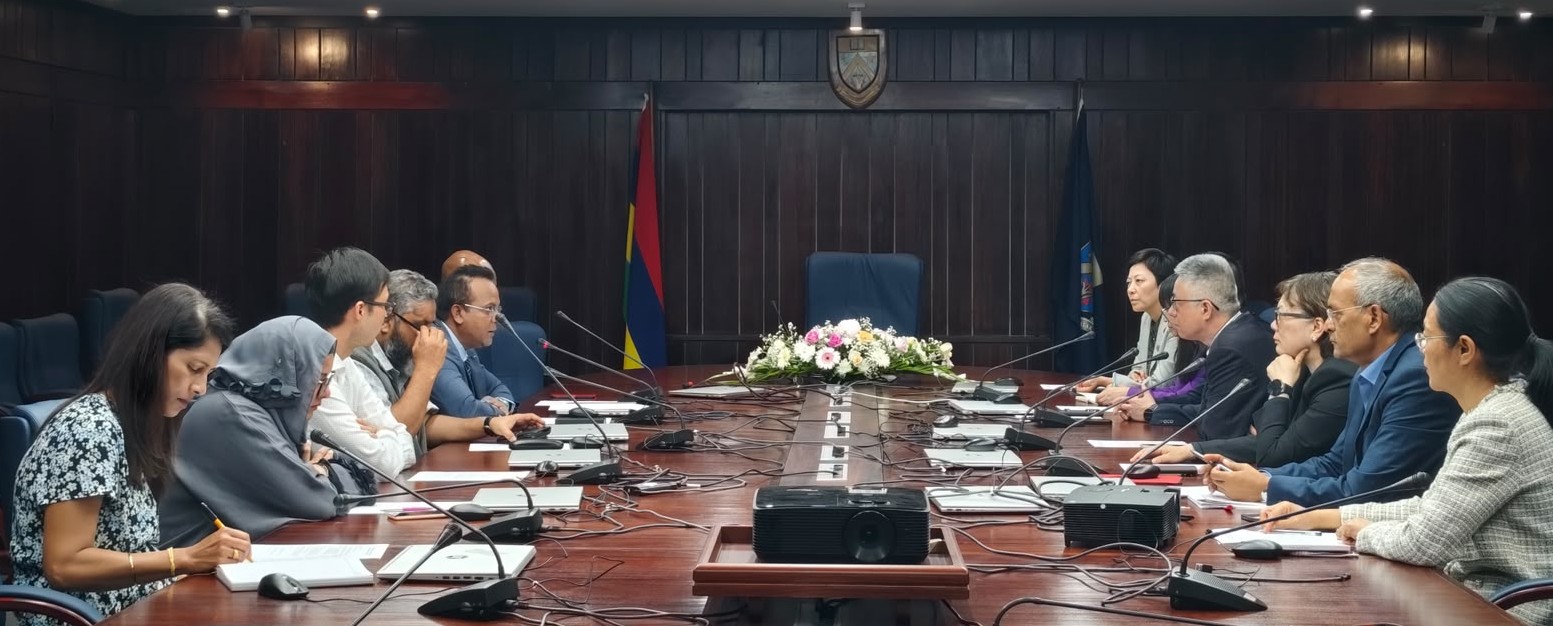
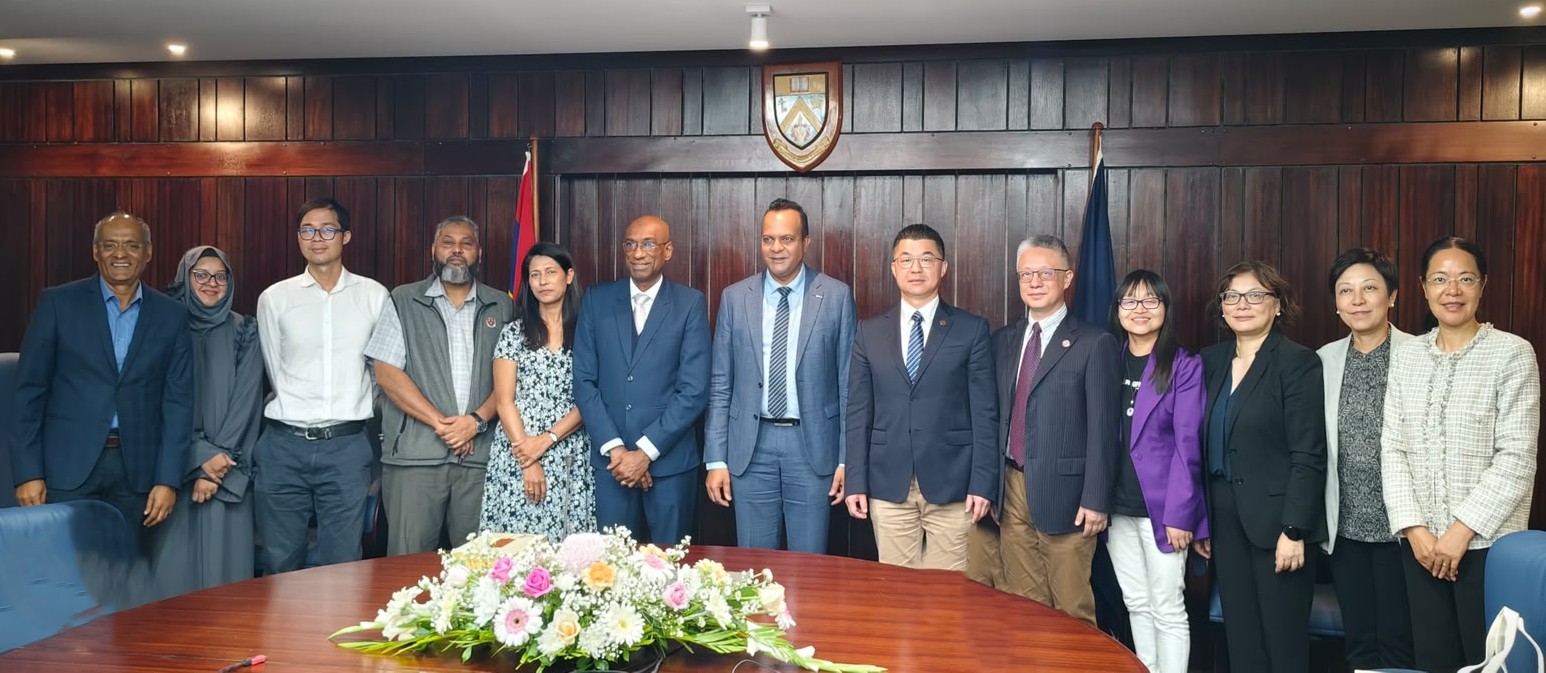
The University of Mauritius (UoM) is set to strengthen its medical education and research landscape through a strategic collaboration with the Shanghai University of Traditional Chinese Medicine (SHUTCM). The Vice Chancellor of UoM, Professor Kavi Kumar Khedo, warmly welcomed a distinguished delegation from SHUTCM, led by Professor Wu Tao, Chairperson of SHUTCM, and accompanied by three Directors from its prestigious affiliated hospitals and the Dean of School of International Education. Professor Khedo highlighted that this visit marks a pivotal moment for institutional growth. He emphasized that UoM is uniquely positioned to leverage the deeply rooted, privileged relationship and strong historic bonds that Mauritius shares with China—a partnership built over many decades of mutual collaboration.
The purpose of the visit was to discuss about the establishment of a China-Mauritius Research Centre of Traditional Medicine; clinical training and teaching of TCM and collaboration on medical research projects and students’ exchanges.
A central theme of the discussions was the evolution of medical training at the university. Professor Khedo advocated for a holistic approach to medical education at UoM, envisioning a curriculum where modern Western medicine and Traditional Chinese Medicine are seamlessly integrated. To institutionalize this vision, the Vice Chancellor proposed the establishment of a dedicated TCM Chair at UoM, drawing a parallel to the university’s existing, successful Chair for Ayurveda medicine.
Professor Fawzi Mahomoodally, Dean of the Faculty of Medicine & Health Sciences, emphasized that Traditional Chinese Medicine (TCM) is a well-established, evidence-based medical practice. He clarified a key regulatory point in that suitably qualified TCM practitioners can register locally with the Traditional Medicine Board under the aegis of the Ministry of Health and Wellness. However, the implementation of TCM practice within the broader healthcare ecosystem remains fragmented and largely isolated from modern Western medicine.
The Department of Health Sciences, through the Head of Department Dr. Zaynab Toorabally, alongside department member Dr. Koon Sun Pat, expressed eager support for the alliance, and noted that TCM holds a vital place in today's healthcare sector and needs to be actively promoted to a broader audience. To bridge the current practitioner gap, they identified high-impact areas for the UoM-SHUTCM partnership, including professional training of local western medical practitioners in TCM and integrative medicine protocols, developing short, specific courses and Higher Education Commission (HEC) approved micro-credentials. By establishing these targeted educational pathways, UoM aims to dismantle the fragmented nature of traditional medicine in Mauritius, creating a more integrated, comprehensive healthcare workforce for the region.
The delegation gave an expose of Shanghai University of Traditional Chinese Medicine (SHUTCM) which was established in 1956. It is one of China’s top-ranked institutions specializing in Chinese medicine. Its core activities encompass higher education, medical research, and comprehensive healthcare services across several elite affiliated hospitals. Its global reputation is built on its major strengths in integrated Chinese and Western medicine, leading national clinical programs, and a large network of international student exchanges. SHUTCM has an active presence in Mauritius through the China-Mauritius Traditional Chinese Medicine Center, which operates in partnership with local entities to provide direct clinical care and wellness programs to Mauritian residents. SHUTCM operates primarily through a strategic medical partnership with the City Clinic Group, Mauritius.