
SDG 16 | Peace, Justice and Strong Institutions
The University of Mauritius upholds the values of good governance, transparency, academic freedom and respect for the rule of law. UoM’s governance structures include representation from staff and students, and the University maintains clear policies on ethics, integrity and anti-corruption. Through its teaching and research in law, governance and public policy, and through expert advice to government and civil society, UoM contributes to building fair, accountable and inclusive institutions in Mauritius. This page presents evidence of the University’s commitment to SDG 16.
16.2 University Governance Measures
16.3 Working with Government
16.2 University Governance Measures
The Council is the highest governing body of the University of Mauritius. Under Section 15 of the University of Mauritius Act 1971, the Council is the executive body of the University. It has custody of the common seal, is responsible for the management and administration of the University’s revenue and property, and has general control over the conduct of the University’s affairs. Section 15(3) of the Act provides that the composition of Council is prescribed by the Statutes, which the Council makes under Section 20 of the Act.
Section 20(1) of the Statutes of the University of Mauritius 2013 provides that the Council includes:
• An elected representative of the academic staff of the University, elected by and from the academic staff
• An elected representative of the non-academic staff of the University, elected by and from the non-academic staff
• An elected representative of the students of the University, elected by and from the registered student body
These representatives are chosen through elections among their peers. They are not appointed by the University. Each one sits on Council as a full member with voting rights, so the people who study and work at the University have a direct voice in its highest decisions.
For more information:
https://www.uom.ac.mu/images/FILES/AboutUs/StatutesUOM2013.pdf
The University of Mauritius formally recognises the University of Mauritius Students’ Union (UoMSU) as the official organisation of its students It is run by students for students under its own constitution.
The Union’s leadership is chosen democratically by the student body. Its Executive Committee consists of:
• four office-bearers, elected by all registered students of the University; and
• one elected representative from each Faculty and from the Centre for Innovative and Lifelong Learning (CILL), elected by the students of that Faculty or Centre.
Every student, full-time or part-time, is a member of the Union. The Union is funded through a Students’ Welfare Fund, which students pay at registration, together with a grant from the University. It manages its own activities from the Students’ Centre and communicates directly with students through its own webpage and its Facebook page.
The Union Provides Governance Input to the University
The University works closely with the Students’ Union and involves it in decision-making wherever possible. This gives students direct knowledge of, and influence on, policies and procedures that affect their teaching, learning and welfare. Students are represented on the following University bodies:
• Highest governance and academic bodies: the Court, the Council, the Senate, and the Teaching and Research Committee
• Student rights and fairness: the Discipline Committees, the Appeals Committee, the Student Academic Progress and Complaints Committee, and the Needy Students Committee
• Academic units: Faculty and Centre Boards, and Programme Boards of Studies
• Campus life and services: the Library, Sports, Safety and Health, and Website committees, and the UoM Catering Services Supervisory Committee
The Union Provides Support for Students
One of the Union’s two main functions is to act as the representative body for students in all matters that concern them. Its other main function is to promote and provide for student welfare. Through its seats on the Needy Students Committee and the Student Academic Progress and Complaints Committee, the Union speaks up for students who face financial hardship or academic difficulties.
The Union Provides Social Activities
The Union is the centre of non-academic student life at the University. It promotes and provides social, cultural and educational activities for students. It has the power to recognise and fund student societies, including recreational clubs, subject-based academic societies, and groups dealing with issues that matter to students.
The Students’ Union at the University of Mauritius, along with its affiliated Clubs and Societies, organised various cultural activities for students, including both local and international participants, as well as staff members. These cultural happenings on the campus play a significant role in fostering student growth, connecting academic experiences with valuable social and personal development.
In a diverse nation like Mauritius, where the University of Mauritius unites individuals from a wide array of cultural, linguistic, and geographical backgrounds, these events serve as essential platforms for community engagement. Rather than merely acting as leisure activities, cultural festivals, heritage celebrations, and artistic displays are intricately woven into the overall student journey, providing benefits that go well beyond the completion of studies. Events highlighted include the Holi Festival of Colours on 14 March 2025, Iftaar Gathering on 19 March 2025, Music Day on 20 June 2025, Gala of Icons on 29 August 2025, Mister and Miss UoM on 02 September 2025, Dravidian and Maharashtrian Show on 05 September 2025, and Divali Show on 17 October 2025, to name a few.
Major musical gatherings, including themed end-of-year events, music festivals, and open-air performances & concerts, regularly turn the campus into a vibrant center showcasing local Mauritian DJs and artists. Notable activities consist of the annual End of Academic Party on 25 July 2025 and the End of Year Festivities on 19 December 2025.
In addition to these entertainment options, talks, seminars, and workshops are also held. These events serve as important intellectual spaces that link classroom knowledge to actual industry developments and directly engage students with national leaders, scientists, and industry experts. Highlighted events entail a Talk on Career in Compliance and Reg Tech on 21 March 2025, a Workshop on SBM Private Banking and Wealth Management on 03 April 2025, an Apiculture Workshop on 04 April 2025, a Workshop on Stress Management and Personal Resilience on 16 April 2025, an Awareness Session on Animal Welfare on 26 June 2025, a World Breastfeeding Seminar on 08 August 2025, the UoM AppCup Competition 2025 taking place from 19 to 21 August 2025, a Responsible Pet Ownership Talk by MSAW and Vetmania on 10 October 2025, a Hult Prize Workshop on 14 November 2025, a roundtable discussion ahead of the International Day for the elimination of violence against women on 24 November 2025, and the Empower YOUth Digital Week - November Numérique 2025, scheduled from 24 to 28 November 2025.
The University of Mauritius (UoM)’s engagement with local stakeholders rests on two sets of written provisions:
• The University of Mauritius Act 1971 and the Statutes of the University, which specify which external stakeholders sit on the University Court and Council, and how they take part in the governance of the University.
• The procedures of the University-Industry Liaison Office (UILO), which set out how the University identifies, contacts and works with local organisations for student placements, internships, traineeships and graduate recruitment.
Who our local stakeholders are
The University's local stakeholders are identified through the membership of its governing bodies, its partnerships and its day-to-day engagement with organisations in Mauritius.
|
Stakeholder group |
Examples |
How they are identified and engaged |
|
Government and public bodies |
Ministry responsible for tertiary education, Higher Education Commission, Ministry of Local Government, Prime Minister's Office, Attorney General |
Named in Statute 19 as members of the University Court; research and consultancy for the public sector |
|
Business, industry and employers |
Business Mauritius, Mauritius Chamber of Commerce and Industry, Mauritius Export Association, Chamber of Agriculture, Bankers Association, placement host organisations |
Court membership; UILO database of organisations; Memoranda of Understanding; On Campus Recruitment Days; placement offers |
|
Professional bodies |
Medical Council, Bar Council, Institution of Engineers Mauritius, association of human resource professionals |
Court membership; input into programmes of study |
|
Educational institutions |
Secondary schools, Mauritius Institute of Training and Development, affiliated institutions |
Court membership; affiliation arrangements; placement settings |
|
Labour organisations |
Trade unions and the University's registered staff unions |
Court membership |
|
Communities |
The public and local communities |
Community outreach programmes, public health sensitisation and public talks |
|
Alumni |
All registered graduates and diplomates |
The Convocation, under Statute 18 |
Engagement through the University's governance
The Statutes of the University provide for external stakeholders to take part in its governance.
The University Court (Statute 19)
The Court, chaired by the Chancellor, brings together representatives of Government, the National Assembly, local government, professional bodies, employers and business associations, trade unions, secondary education, staff unions, students and alumni.
“The Court shall hold at least one meeting in each academic year.”
Statute 19(4)
“The Court shall have power to discuss any matter relating to the University and convey its opinion thereon to Council.”
Statute 19(8)
The Court is presented with the audited financial statements of the University and with reports from the Vice-Chancellor and the Deans (Statute 19(5)).
The Council (Statute 20)
The Council includes external members nominated by the Prime Minister, three of whom come from the public sector, alongside elected representatives of academic staff, non-academic staff and students.
The Convocation (Statute 18)
The Convocation consists of all registered graduates and diplomats of the University. It elects five members of the Court and may discuss and pronounce an opinion on any matter relating to the University.
Procedure for engaging with local organisations for student placements
The University Industry Liaison Office (UILO) is the University's central point of contact for engagement with industry. It identifies, engages and maintains working relationships with local organisations through the following procedure:
1. Identify placement partners
The UILO identifies potential partners through its database of organisations, including private-sector companies, schools, tertiary institutions and public and private-sector bodies. It also engages with organisations that express an interest in offering employment, internship or traineeship opportunities to UoM students and graduates.
2. Engage formally
The UILO contacts prospective and existing partners through official correspondence and invites them to submit placement offers or formal job and traineeship advertisements. Organisations without a suitable advertisement complete a standard placement or opportunity form.
3. Review and circulate opportunities
The UILO checks each submission for completeness, records it, and communicates the opportunity to eligible students and graduates. Placement opportunities are recorded in the Placement Management System (PMS).
4. Match and place students
The University matches students with suitable organisations. Students who secure placements on their own submit the relevant placement agreements. Host organisations assign a Placement Supervisor.
5. Monitor and keep records
Students submit attendance sheets, reports and testimonials. The University keeps records of correspondence with organisations, placement offer forms, PMS records, placement agreements and student allocations.
When organisations requests for student or graduate contact details, the UILO protects personal data by circulating verified opportunities through University channels instead of disclosing details directly as part of their Data Protection.
Other ways we engage
Industry and employers
- The UILO organises On-Campus Recruitment Days, where employers meet students and graduates.
- Academics work with major employers to design programmes of study that meet industry needs.
- The University provides consultancy services to the public and private sectors.
- Formal partnerships are set up through Memoranda of Understanding. For example, the MoU with the Mauritius Chamber of Commerce and Industry (February 2021) covers industry-led research, joint projects, Innovation Week and sectoral policy dialogue forums.
Communities
- Students take part in community outreach programmes.
- The Academic Chair in Ayurveda Medicine runs outreach sensitisation programmes on preventive healthcare through Ayurveda and Yoga.
- The Faculty of Medicine and Health Sciences regularly coordinates the Medical Update Group (MUG) Talks with local medical partners/ practitioners.
In practice in Year 2025
|
Figure |
What it shows |
|
300+ |
Local industry partners engaged by the UILO for student placements in 2025 |
|
113 |
Consultancy projects for public and private-sector clients (UoM Fact Sheet 2025) |
|
5 |
Court members elected by alumni through the Convocation (Statute 18) |
The University of Mauritius (UoM) is committed to inclusive and accountable governance. Under the Statutes of the University of Mauritius 2013 (GN No. 93 of 2013, made under the University of Mauritius Act), the University has set up formal participatory bodies. These bodies give local government, civil society, the private sector, professional bodies, alumni and the wider community a direct and meaningful role in its decision-making.
The University Court: Our Widest Stakeholder Forum
The Court is chaired by the Chancellor and brings together a broad cross-section of Mauritian society. Its members include:
• Local and national government: a representative of Local Government (nominated by the Minister of Local Government), two Members of the National Assembly, the Minister and Permanent Secretary overseeing tertiary education, and representatives of the Prime Minister’s Office and the Attorney-General
• Civil society and community: a representative of the Trade Unions, a nominee of the Minister of Cooperatives, a representative of Learned Societies, and a secondary-school rector representing the education community
• Business and economic sectors: the Mauritius Employers Federation, the Chamber of Commerce, the Chamber of Agriculture, the Mauritius Export Association, the Association of Bankers, three representatives of the Professions, and five members from business and industry
•The University community: alumni (through the Convocation), the registered Staff Unions, and the Students’ Union
The Court meets at least once a year. Members receive the University’s audited financial statements and the reports of the Vice-Chancellor and Deans. The Court may discuss any matter relating to the University and formally convey its opinion to Council, so external stakeholders have a direct voice in institutional accountability and strategy.
Council and Senate: External Voices in Governance and Academic Decisions
The Council is UoM’s governing body. Up to nine of its members are drawn from outside the University, three of them from the public sector, and are chosen for their standing in education, agriculture, the arts, government, science, technology, business and the professions. The Council also includes elected representatives of academic staff, non-academic staff and students. The Senate is the supreme academic authority, and it includes three members from the professional, commercial and industrial sectors as well as a Students’ Union representative. Each month, meetings of Council and Senate were held in 2025.
Faculty Advisory Committees
Each Faculty may appoint Advisory Committees with up to 12 external members who have expertise in the relevant field. These committees advise on how well curricula meet national needs, on graduate employment and careers, and on areas where new teaching or research is needed.
Consultative Committee
The Consultative Committee ensures ongoing collaboration with the private sector. It advises the University on programme and research development, the relevance of curricula to labour-market needs, quality assurance, and placements and internships.
Convocation
The Convocation is made up of all UoM graduates and diplomates. It elects members to the Court, can give its opinion on any matter relating to the University, and works to promote and support the institution locally and internationally.
Transparency
Council and Senate papers, except reserved items, are available to Members of the University before meetings. Approved minutes are circulated, and Council and Senate meetings are open to Members of the University as observers.
Source: [Statutes of the University of Mauritius 2013 – https://www.uom.ac.mu/images/FILES/AboutUs/StatutesUOM2013.pdf
The University of Mauritius is committed to maintaining the highest level of integrity in the conduct of its affairs through the adoption of corruption prevention strategies.
Zero-Tolerance Approach:
• The University's Anti-Corruption Policy (approved 07 December 2020) states:
"The organisation will not tolerate corruption in the administration of its responsibilities, whether from inside or outside. It expects the highest standards of conduct from staff, board members and those who have dealings with the organisation including stakeholders and the general public. It is committed to ensuring that the risks of corruption are kept to its minimal by applying a zero tolerance approach to corruption."
Anti-Corruption Commitment:
• The University has signed the Anti-Corruption Commitment developed by the Independent Commission Against Corruption (ICAC).
• The University is committed to using all available means and resources to combat corruption in all its forms.
Scope:
• The policy applies to all Committees and Council Members, management, employees, students, consultants, suppliers, contractors, outside agencies doing business, and any other parties having a business relationship with the University.
Definitions:
• Corruption is defined as per Financial Crimes Commission Act 2023.
• An act of corruption includes: abuse of public or private office for private gain; bribery; gratification; and conflict of interest.
Responsibilities:
• The Anti-Corruption Committee (ACC) is responsible for developing and coordinating the implementation of the policy.
• The ACC comprises: Pro-Vice-Chancellor (Planning and Resources) as Chairperson; Chief of Facilities and Services; Dean, FLM; Finance Director; Director of Human Resources; and a representative from ICAC.
• The Committee meets regularly and reports to Council.
Whistleblower Protection:
• "There should be no reprisal against any person who in good faith reports an act of corruption or malpractice or suspected illegal and dishonest activity or any activity that he/she has witnessed. However, disciplinary actions may be taken against any person who knowingly and/or intentionally had made false allegations."
Disciplinary Measures:
• Disciplinary measures in accordance with established procedures will be taken against any staff who breach any of the provisions of this policy.
Conflict of Interest:
• The University's Code of Ethics/Conduct (Section 3.1) requires all employees to declare or disclose any actual or potential conflicts of interest to the Vice-Chancellor by filling in the Conflict of Interest Declaration Form.
Organized Crime:
• The University's Anti-Corruption Policy addresses corruption, bribery, fraud, collusion and coercive practices. The University is committed to extending its principles to cover organized crime and will review its policy accordingly.
For more information:
https://drive.google.com/file/d/1rMDVe32U-gZpb7F_P58zaKPZoB1apHc0/view?pli=1
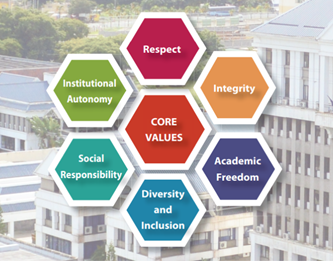
The University of Mauritius (UoM), as a signatory of the Magna Charta Universitatum, is committed to upholding and promoting academic freedom as a fundamental principle of higher education. Academic Freedom is recognised as one of the University's six Core Values, alongside Respect, Integrity, Diversity and Inclusion, Social Responsibility, and Institutional Autonomy, as illustrated in the following Figure.
In line with the principles of the Magna Charta Universitatum, the University recognises the importance of academic freedom in fostering independent thinking, critical enquiry, innovation and the advancement of knowledge. The University supports the freedom of all academic staff, irrespective of their academic rank or seniority, to pursue research in their chosen fields, explore new ideas, express scholarly opinions, publish and disseminate research findings, and participate in public discussions relating to their areas of expertise without undue interference.
With regard to research freedom, both senior and junior academics are supported in identifying and pursuing research topics of their choice, developing independent research initiatives, seeking research funding, collaborating with national and international partners, and communicating their research findings through publications, conferences and other academic platforms. This freedom applies equally to established academics and those at the early stages of their academic careers, subject to applicable ethical, legal and institutional requirements.
With regard to teaching freedom, both senior and junior academics are supported in exercising academic judgement in the delivery of their teaching, selecting appropriate teaching methods, presenting different scholarly perspectives and encouraging critical thinking, open discussion and intellectual debate among students. Such freedom is exercised within the framework of approved academic programmes, learning outcomes, quality assurance requirements and applicable University regulations.
The University's commitment to academic freedom seeks to provide an environment in which academics at all levels can undertake research, teach, share knowledge and contribute to public discourse without undue interference or discrimination. Academic freedom is exercised responsibly, with due regard to academic integrity, professional ethics, respect for others and applicable laws and University rules, regulations and procedures.
Through its recognition of Academic Freedom as a Core Value and its commitment to the principles of the Magna Charta Universitatum, UoM affirms the importance of protecting and supporting research and teaching freedom for both senior and junior academics.
The University of Mauritius publishes its financial data every year. Its audited Financial Statements for the year ended 30 June 2025 are prepared under International Public Sector Accounting Standards (IPSAS), as required by the Statutory Bodies (Accounts and Audit) Act, and published in the University’s Report on Activities 2024/25.
16.3 Working with Government
The University of Mauritius provides specific expert advice to local, regional and national Government through policy guidance, participation in committees, and provision of evidence.
Consultancy Activities:
• The University's Consultancy and Contract Research Scheme (Staff Handbook, Section 4.1.7) defines consultancy as professional activity by University staff related to their field or discipline, where a fee-for-service or equivalent relationship with a third party exists.
• Staff are invited to consult the approved Consultancy and Contract Research Scheme available at the office of the Pro-Vice-Chancellor (Planning & Resources).
Special Leave/Release:
• The University grants special leave to academic and non-academic staff to attend, participate or present papers in workshops, seminars and conferences (Staff Handbook, Section 2.3.10).
• Release may also be granted to academic staff to service courses in Rodrigues or when non-academic staff members are involved in conducting examinations and class tests in Rodrigues and Outer Islands.
UoM Representatives on Government Committees:
• The University provides expert advice to government through the following representatives:
The University is committed to making its expertise available to the Government at local, regional and national levels.
The University of Mauritius (UoM) provides outreach, education and capacity building for policymakers, legislators and public officials through policy forums, consultative workshops, conferences, and training programmes delivered with government ministries and national agencies. Its Faculties and Centres provide expertise across economics, finance, law, governance, trade, energy, technology and climate change. This work supports evidence-based policymaking at national and regional level.
Policy dialogue forums with government. During its 60th anniversary year, UoM convened several forums that brought ministers and officials together with researchers and industry:
• National Research Week 2025 (14 April 2025). UoM hosted the opening ceremony and led Day 1, “Innovating Sustainability: Synergies for a Resilient Future”. The day included sessions on the blue, green, circular, silver and cultural economies, and it brought together academia, Government, the private sector and civil society.
• Roundtable on financial sector development (23 July 2025). The Department of Economics and Statistics organised a roundtable on financial sector development in Mauritius in the digital era, with the Junior Minister of Finance as Chief Guest. A representative of the Financial Services Commission sat on the panel, and topics included digital transformation, regulatory challenges, fintech, cybersecurity and financial inclusion.
• International Conference on International Trade and Investment, ICITI 2025 (25–26 September 2025). UoM organised the conference with its WTO Chair Programme, the Centre of Excellence for International Trade and Investment and the Indian Ocean Rim Association. It drew over 70 participants from 16 countries, and the opening included addresses by the IORA Secretary-General, a WTO Deputy Director-General and the Minister of Tertiary Education, Science and Research. The programme featured more than 40 presentations by academics and policymakers across trade, FDI, digital trade and environment tracks.
• Mauritius Renewable Energy Forum 2025 (6 November 2025). UoM hosted the forum in partnership with the Mauritius Renewable Energy Agency (MARENA). The Minister of Energy and Public Utilities gave the keynote on the Government’s energy transition policy, and the Central Electricity Board and Economic Development Board took part in the panel. The forum aimed to bridge policy formulation and practical implementation.
Contribution to national policy and legislative consultations. A UoM team led by Dr Verena Tandrayen-Ragoobur, with Dr Sheereen Fauzel and Dr Taruna Ramessur, drafted and formulated the National Employment Policy 2024–2028 in collaboration with the ILO and the Ministry of Labour, Human Resource Development and Training. UoM academics also took part in Government consultations on draft legislation and sector policy, including:
• a consultative workshop on the Domestic Abuse Bill (25 September 2024);
• the Ministry of Financial Services and Economic Planning’s consultative workshop “Rethinking the Future of the Financial Services Industry” (10 March 2025).
Education and training for public officials. UoM runs dedicated programmes for public-sector officers under agreements with ministries:
• the Diploma in Forestry for a fourth cohort of at least 20 officers of the Ministry of Agro-Industry, Food Security, Blue Economy and Fisheries;
• the BSc (Hons) Management (HRM) top-up programme for a third batch of 20 officers of the Ministry of Public Service and Administrative Reforms.
Each programme is governed by a Memorandum of Agreement. In the field of law, the University provides continuing legal education to public-sector groups, including police officers, prison officers and social security officers. UoM is also the long-standing regional partner of the WTO for the Regional Trade Policy Course. This is an eight-week course for government officials of English-speaking African WTO members working on trade policy, and successful participants are jointly recognised by the WTO and UoM.
Through these activities, UoM strengthens the knowledge and capacity of policymakers and public officers, provides neutral platforms for dialogue between Government, academia and industry, and supports evidence-based policy and legislation.
The University of Mauritius (UoM) takes part in research commissioned or co-designed by government ministries, public agencies and parastatal bodies. Through its Consultancy Unit, its Faculties and its formal partnership agreements, UoM provides independent, evidence-based research that ministries use to prepare national reports, design strategies and meet international commitments.
For the Academic Year 2024/2025, public-sector clients commissioned 60 UoM consultancy and research assignments.
Research commissioned by national government ministries:
• Roadmap for a Plastic Free Mauritius for the Ministry of Environment, Solid Waste Management and Climate Change, led by the Faculty of Engineering.
• Study of the impact of cultural beliefs, norms and practices on gender roles, gender equality and gender-based violence for the Ministry of Gender Equality and Family Welfare, led by the Faculty of Social Sciences and Humanities.
• Preparation of the State Reports of the Republic of Mauritius under the African Charter on the Rights and Welfare of the Child for the same Ministry, led by the Faculty of Law and Management .
• National Review of the Beijing Platform for Action for the same Ministry, led by the Faculty of Social Sciences and Humanities.
• Development of curricula and an assessment framework in Finance and Technology for the Institute of Technical Education and Technology, led by the Faculty of Law and Management.
• An Economic Impact Analysis of the Financial Services Sector of Mauritius for the Ministry of Financial Services and Economic Planning.
UoM has agreements for joint research with public bodies:
• Agriculture. The Faculty of Agriculture has collaborative agreements and MoUs with the Food and Agricultural Research and Extension Institute (FAREI) and the Ministry of Agro-Industry, Food Security, Blue Economy and Fisheries.
• Health. The Faculty of Medicine and Health Sciences collaborates with the Ministry of Health and Wellness and the World Health Organization.
• Planning. UoM signed an MoU with the Town Planners’ Council of Mauritius in March 2025 to collaborate on research, teaching and learnin.
• Biotechnology. UoM signed an MoU with the Mauritius Institute of Biotechnology Ltd on 18 April 2025.
Through these activities, UoM gives government evidence for national strategies, international reporting obligations and public policy in areas including the environment, gender equality, children’s rights, financial services and higher education.
The University of Mauritius (UoM) upholds Respect, Integrity, Academic Freedom, Diversity and Inclusion, Social Responsibility and Institutional Autonomy as its core values.
Multi-stakeholder governance. This openness is built into the University's own governance. The UoM Court brings together representatives of learned societies, the professions, the Higher Education Commission, local government, trade unions, employers, the Mauritius Export Association, the Chamber of Agriculture, the Chamber of Commerce, the Association of Bankers, secondary schools and the University's staff unions, alongside academics and students.
Constitutional and electoral reform (September 2025). UoM hosted a public lecture and panel discussion on “Constitutionalism in Mauritius”, delivered by Professor Tarun Khaitan, Chair of Public Law at the London School of Economics, during his visit to Mauritius on 22–26 September 2025. The event was organised with the Mauritius LSE Society Trust Fund, the National Human Rights Commission and the UoM Law Society and Alumni, and the President of the Republic was among those attending. Discussion covered the principles of a resilient constitutional order, the role of courts in advancing social and environmental rights, and electoral reform options: the Best Loser System, ranked-choice voting, proportional representation and a two-chamber parliament. These are among the most debated political questions in Mauritius, and UoM gave people holding different positions a neutral academic setting in which to examine them.
National Research Week 2025 (14 April 2025). UoM hosted the opening ceremony of National Research Week 2025 and led Day 1, “Innovating Sustainability: Synergies for a Resilient Future”. Thematic sessions on the blue, green, circular, silver and cultural economies “brought together key stakeholders from academia, the Government, the private sector, and civil society” and “fostered a vibrant space for knowledge exchange” on national priorities and global sustainability objectives.
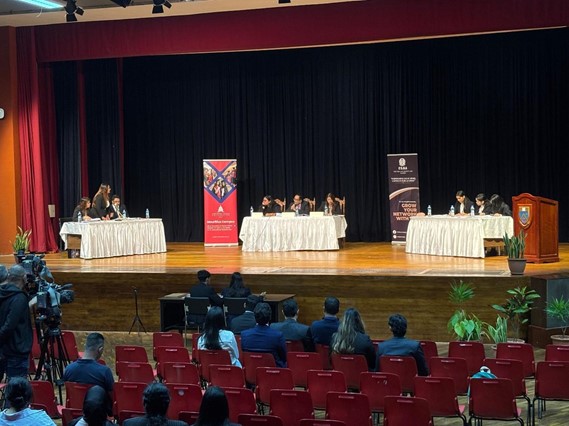
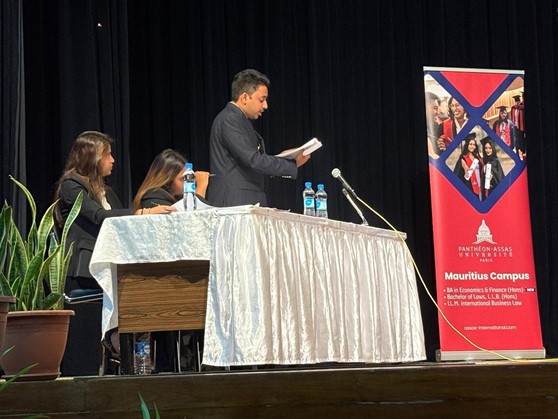
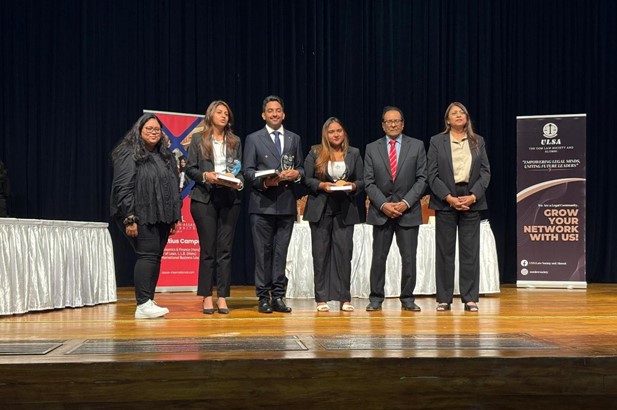
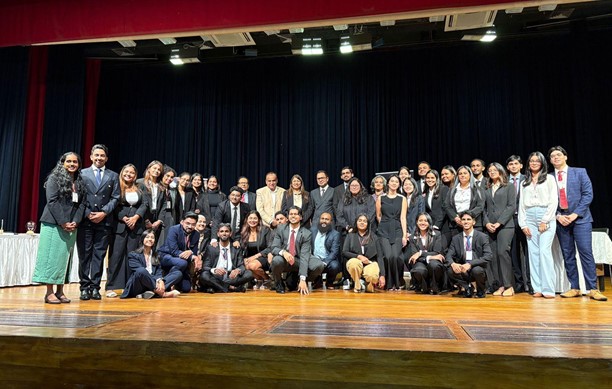
Inter-HEI Moot Court Competition 2025 (24–28 June 2025). The University of Mauritius Law Society & Alumni (ULSA) Board 2025, in collaboration with the Panthéon-Assas Law Society (ALS), hosted an Inter-University Moot Court Competition on International Environmental Law. The quarter-finals were held on 24 June, the semi-finals on 26 June and the final on 28 June 2025. Law students from five institutions took part: the University of Mauritius, Panthéon-Assas, the Open University of Mauritius, Middlesex University and the University of Central Lancashire (UCLan).
The competition gave participants a structured platform to examine legal challenges in environmental protection and sustainability, present competing arguments, weigh differing interpretations of the law and debate them respectfully. Members of the judiciary and the legal profession judged the rounds, including former Supreme Court Judge Justice Me Vinod Boolell and Mrs Vedhalini Bhadhain, Chairperson of the Environment and Land Use Appeal Tribunal (ELUAT). Their involvement linked legal education to professional practice and exposed students to different perspectives on legal interpretation, advocacy and justice.
Through these activities, UoM provides a trusted, neutral space where people with different interests and viewpoints can examine complex societal challenges through evidence, informed discussion and respectful exchange. This supports the SDG 16 aims of inclusive dialogue, accountable institutions and access to justice.